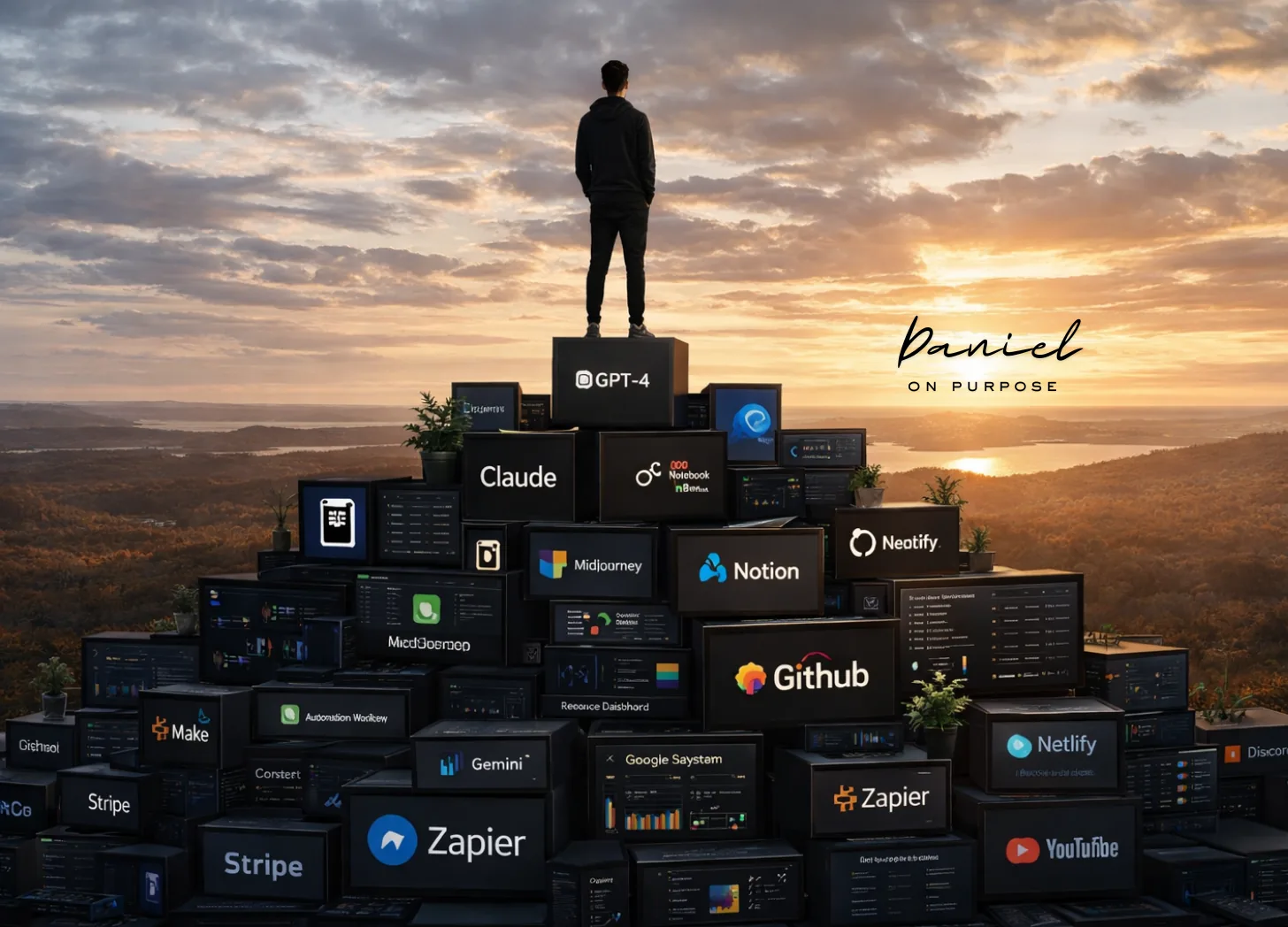
Most businesses still use AI like it is one tool. Someone opens a chatbot, types something, gets an answer, tweaks it, moves on. It feels productive, and that is where everyone starts. But if you stay in it long enough, something else happens. You start stacking.
You learn one tool this week, another next week. You pick up a small trick somewhere. None of it feels like a big leap on its own. Over time it compounds. Things you learned a month ago show up in how you work today, and you are not starting from scratch anymore. You are building on top of what you already know.
That is where the shift happens. At some point your stack stops being a pile of tools and starts becoming a system. Not something you open and close, but something that connects and runs with you, and sometimes ahead of you.
I noticed it in small ways first. Early on I used AI just to get outputs. Ask for something, copy it, paste it somewhere else, repeat. Every task was still manual, just faster. Now I think differently. Instead of asking what a tool can do for me in this moment, I ask how the things I already built can work together.
A plain example. A conversation becomes notes. Those notes become a structured document. That document becomes something ready to send. A long piece of content breaks into smaller pieces, and those pieces become captions and posts. None of it is complicated on its own. Stacked together, it stops being one tool and starts being a system that removes friction from work you were already doing.
That is what most companies are missing. They keep chasing the next tool, when the real value is in how the tools they already have start working together. The businesses getting ahead are not better at typing prompts. They are better at stacking, and better at turning that stack into something that runs.
The good news is you do not have to overcomplicate it. Take one process you already do. Break it into steps. Ask which of those steps could connect so nobody has to do them by hand every time. Maybe it is joining two steps. Maybe it is taking something you already wrote and letting it turn into something else automatically.
It does not have to be perfect. It just has to work. Because over time those small stacks turn into systems that work with your business instead of waiting on it. And once you see it that way, it is hard to go back.
Originally published on Daniel Rivera's Substack and at danielgrivera.com.