I spent about an hour on the phone with my friend Drew Lentz. Drew is one of the few people I know who understands how the internet actually works underneath the apps. Twenty-five years in wireless and infrastructure, built companies, co-founded a nonprofit teaching people to code. He spends his life thinking about how systems connect and scale.
We were trading notes on AI tools and workflows, and he said something that made me stop. What I have been able to build in the last six weeks would have taken five years with a development team before.
Sit with that for a second, because it is a business statement, not a tech one. The cost to build, test, and ship an idea just fell through the floor. The person willing to use these tools now has leverage that used to require a payroll.
Then the real theme showed up. The biggest problem with AI right now is not the technology. It is a phrase owners keep telling themselves. I will learn it later.
I get the instinct. New tools every week, new models every month, a constant stream of posts saying whatever you learned last month is already old. When it moves that fast, waiting until it settles down feels smart.
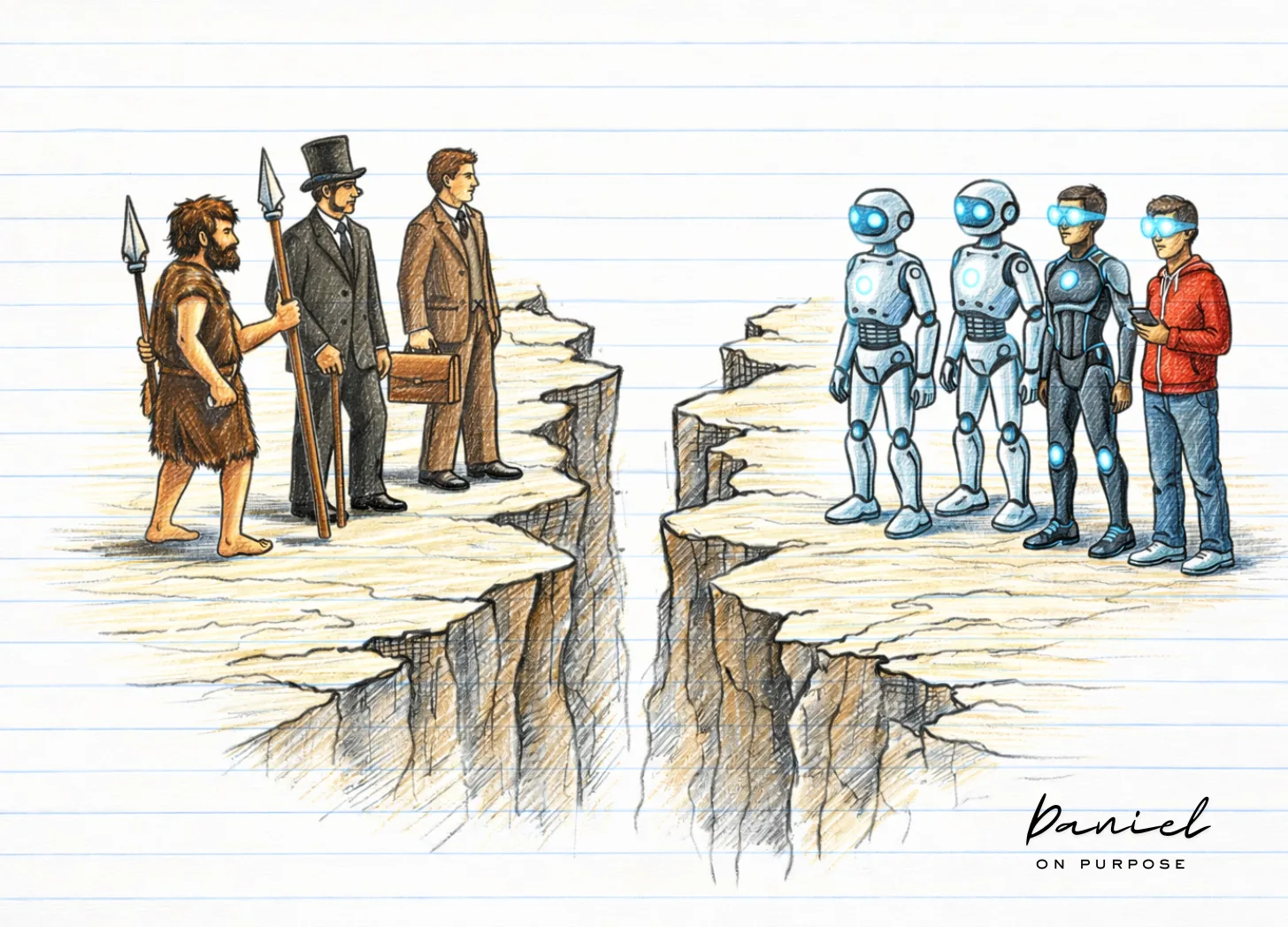
Here is the trap. Most skills are linear. Fall behind in one, and you can catch up later because the thing sat still while you were gone. AI does not behave like that. The models improve constantly. The people experimenting build intuition that compounds week over week. So when a business waits six months to start, it is not six months behind. The tools moved, the workflows got sharper, and the competitor down the street who started early kept stacking. The goalposts did not stand still. They moved.
Drew called it a paradox. For people who understand systems and problem solving, AI is a force multiplier, where one person does the work of a team. For people who sit on the sidelines too long, it starts to feel alienating instead of useful. The gap between the two widens faster than anyone expects.
That reframed the risk for me. The real risk is not using AI imperfectly. The real risk is waiting too long to use it at all.
You do not have to master every tool. You do not need every technical detail. But the owners experimenting today are building the intuition and the workflows that compound. Each small project makes the next one easier. Waiting does not pause that. It means standing still while everyone else speeds up.
That is the cost of waiting.
Originally published on Daniel Rivera's Substack and at danielgrivera.com.